Friday, June 22, 2012

The Benefits of Sea Kelp (Macrocystis Pyrifera) Extract in Skin Care


It seems like there’s a new, innovative ingredient that’s included in skin care every year. From hyaluronic acid, to retinoids and resveratrol, the amount of possible skin-loving extracts, antioxidants, alpha hydroxyl acids and ingredients are never ending.

Well, it’s time to add yet another wonderful little miracle to the list.

Sea kelp, or macrocystis pyrifera, has also been studied in labs for its possible link to promoting a plump, youthful look by soothing the skin and improving cellular circulation. This relatively new discovery is not well documented yet, but from the  effects we’ve seen so far, the results justify its exclusive inclusion in our MD® Ultimate Skin Brightening Anti-Aging Cream.

What makes kelp extract so beneficial for the skin?
The kelp itself is a brown sea algae, or seaweed, that is normally found in the Antarctic Ocean.  Because of its rich iodine, mineral, anti-oxidant and natural anti-inflammatory aspects, kelp is believed to moisturize, soften and help skin retain its moisture.  Kelp also contains elements that help remove toxins, soothe and can easily penetrate the skin for instant hydration. It also aids in keeping skin smooth. This nourishing extract has no adverse side effects and works well with other antioxidants and vitamins such as Vitamin C and E.

Research has also shown that macrocyctis pyrifera extract can help prevent wrinkles with its rich moisturizing advantage.  Another plus to its possible anti-aging hook is its silicone content, which is believed to help prevent the skin from sagging. In spas, kelp is often used as body treatments to temporarily tighten the skin. This benefit is easily translated onto one’s face. Kelp can also help prevent the breakdown of elastin and collagen, promoting a youthful appearance.

MD® Ultimate Skin Brightening Anti-Aging Cream’s main focus is on this remarkable extract, which will help smooth, soften and nourish your skin along with Vitamins E and C. By applying this after a gentle face cleansing twice a day, you can see results in as little as 30 days.  Let MD’s anti-aging cream help diminish the appearance of age spots, wrinkles, and pores and visibly rejuvenate your skin – all with extra brightening effects to deal with discoloration, age spots or uneven skin tone. 

MD® Ultimate Skin Brightening Anti-Aging Cream also provides antioxidant protection and heals sun damage while inhibiting melanin production and hydrating the skin, leaving your skin looking flawless.

Algae photo credit: Scott Gabara

Friday, June 15, 2012

End bad hair days due to a flaky, oily, itchy scalp and thin hair in weeks


Most women would rather stay at home than deal with yet another bad hair day. Having hair that won’t cooperate is frustrating enough – but it’s made even more pronounced when the cause is something that’s seemingly obvious to solve, yet won’t go away. Full, thick, luxurious hair’s noticeably easier to style – but what do you do when your hair’s limp, oily, flaky and itchy?

What exactly causes a flaky, itchy and uncomfortable scalp?

Thinning, oily, hair can often be traced back to its roots – or in this case, the scalp. A flaky, oily, itchy scalp is a constant contributor to bad hair days. Learn how to attack the issue head-on with ingredients that handle the source efficiently, safely, and naturally.

Excessive sebum or oil production is the primary cause for such a scalp condition. The extra oils contribute to an overgrowth of scalp fungus, and that creates dandruff, inflammation and flakes.
In addition, DHT, or dihydroxytestosterone, is formed when a naturally occurring enzyme called 5-alpha-reductase is combined with normal testosterone. This is also a main cause of hair loss and baldness.
Dandruff, a mild form of seborrheic dermatitis, is also a major factor of excessive sebum production. The most common symptoms are an itchy, inflamed, and sometimes oily scalp that produces dry, white flakes.


A simple and effective formula to combat an oily, itchy scalp and dandruff
MD Scalp Essentials is our breakthrough, physician formulated product created to cut down on excessive sebum production, the enzyme that causes DHT and hair loss, work against the fungus and bacteria that exacerbate the symptoms, and finally ease your scalp.
This naturally inspired and fast acting formula uses three powerful compounds, verbascoside, mandelic acid and caffeine. Verbascoside comes from extracts of the lilac flower, while mandelic acid is derived from the extract of bitter almonds. Caffeine supports the functionality of verbascoide and mandelic acid, and also help inhibit further hair loss.
Our fast acting formula addresses BOTH the symptoms and the cause so you can have enjoy an itch-free scalp, benefit from less frequent shampooing and fuller, thickerlooking hair.

Verbascoside
Here at MD®, we've been able to isolate verbascoside from the lilac through carefully measured and highly sustainable, advanced, and eco-friendly plant stem cell extraction technology.
Verbascoside, an antioxidant and defense molecule is a result of this process. It has been shown to regulate and control your scalp's oil, and quickly relieve an itchy scalp.
Verbascoside also controls sebum production, inhibits DHT, and simultaneously reacts against the Malassezia fungus, making this an all-in-one product to safely and naturally control dandruff.

Mandelic Acid
Mandelic acid is a pleasantly fragranced alpha-hydroxy acid (AHA), formed when heating an extract from bitter almonds with diluted hydrochloric acid.
We have discovered that the antibacterial and antifungal mandelic acid, when combined with the oil reduction power of verbascoside, harmoniously develops a simple, fast-acting and easy to use formula that will treat your issues right at the source.

Caffeine
Recent scientific studies show that applying caffeine topically to the scalp can inhibit the hormone that contributes to hair loss and stimulating hair follicles. These tests have also shown that caffeine has helped prevent further hair loss.

A study from the University of Jena discovered that caffeine is effective on patients whose pattern baldness was a result of excessive DHT. Their research has also led to results that showed caffeine alone leading to a significant stimulation of hair growth.


Try MD Essentials Today 
This innovative technology in MD Scalp Essentials will refresh your greasy scalp, reduce the appearance of dandruff and flakes and soothe an inflamed scalp, resulting in fuller, thicker looking hair and a healthier base overall.

Friday, June 8, 2012

Stylists, listen up: How to educate your clients on hair loss


As we discussed in our last article, hair loss is a tough subject to approach and discuss with your female clients. As the professional, your voice and knowledge can and will make a difference with your client and ultimately help you both achieve your goals - her with thick, full locks, and you with her loyalty, camaraderie  and repeat business. 

But how do you start on becoming her go-to with her hair loss issues, even without a medical degree?

Become an expert in hair loss, treatments and solutions
Before you can confidently begin to offer solutions, options or advice on hair loss, you should become an expert on the subject. If your clients are aware of their hair loss, they may be doing online research and finding misinformation. Your goal is to show that you have not only the answers, but are much more knowledgeable about the subject than they believe. Become a reliable source of accurate information for your clients.

Once you know all about the different types of hair loss and its causes, you’ll need to learn about the numerous possible treatments and solutions. Even if your client isn’t asking for any specific endorsement, knowing what their choices are can help you deduce the right suggestion when it does come down to a recommendation.

Familiarize yourself with solutions depending on the type of hair loss 
There are several solutions and treatments for female hair loss, ranging from topically applied products, orally ingested supplements, shampoos, conditioners, serums and much more. Brush up on your knowledge regarding active ingredients that work against hair loss such as minoxidil, finasteride, and verbascoside. You can also mention hair restoration surgery. While a possible solution, only 250,000 procedures have been done in 2009 worldwide, and the market is dominated by men. Female hair loss is still mainly unconsidered.


How do you educate your clients on hair loss?
When speaking to a client about hair loss, use layman's terms. Avoid too many medical terms unless they are simple enough to pronounce and are used sparingly. For example, you’ll likely have to use the term “androgenetic alopecia” as the official term for hair loss, but you can use the acronym “DHT" instead of dihydroxytestosterone.

Use simplicity to describe hair loss and its causes. Explain what the common and primary symptoms are, such as seeing more hair on your pillow or brush. Show them how to inspect their hair on the crown. 

Describe the various causes and why they can contribute to hair loss, and ensure that they understand each one clearly. If necessary, explain in detail how hormones can affect hair loss, or even ask them if they possibly know someone in the family that suffered from it.

By instilling all of your knowledge to your client in an easy to understand manner, you empower them to look for a solution - ideally from you.

Friday, June 1, 2012

How stylists can help their clients with hair loss


As a stylist, your female client and their hair is your canvas. But what do you do - or worse, say - when your client’s hair is thinning or looks less full than before? 

There are many reasons why women suffer from hair loss. Hair loss, or alopecia, comes in many forms and affects both men and women worldwide. 
Hormone fluctuations (such as from menopause), genetics and stress are a few of the most common causes of hair loss. 

The most tell-sale sign is noticeably less hair, thinner overall density, and seeing more of the scalp on the crown. Female pattern baldness often starts at the crown.

While you can’t replace these professionals or their focused expertise, what can you do to help? How do your approach a client who is losing her hair but not asking for solutions yet?

The moment you notice your client’s thinning hair, take the initiative. Ask questions, such as whether they’re noticing more hair on their brush, in the sink, on the pillowcase, or on the floor while grooming. Seeing more hair in these areas is often the first sign of hair loss.

Acknowledge that there is an issue and start educating your client on the causes and symptoms of hair loss. Assure them that they are not alone and that is a widespread issue. Share statistics to keep them at ease. Tell your client how hair loss can happen, such as hormonal, genetic, or health issues. By letting them know the possible causes, it empowers them to actively look for a way to stop it at the source. 

Friday, May 25, 2012

Watch crow's feet fly away with the right eye cream treatment


The first thing most people notice about you is your eyes. In fact, making one's eyes look young, revitalized and wrinkle-free is a top concern for women over the age of 40. At that point, fine lines, smile wrinkles and dark circles can cause one to look years older than they really are.

While doing the obvious, such as wearing SPF daily, not sleeping on your side, and avoiding tobacco can all do wonders for helping stave off or prevent premature wrinkles, what does one do to minimize the lines that are already there?

Proper hydration is key for keeping skin firm, plump and younger-looking. Drier skin types allow wrinkles to be more visible, so finding the right combination of ingredients that firm, nourish and protect the delicate eye area is ideal.

Eye creams on the market today advertise many different breakthrough ingredients, such as caffeine, antioxidants, retinol, peptides and hyaluronic acid. These are effective for many, but some, such as retinol, can be too drying for sensntive skin.

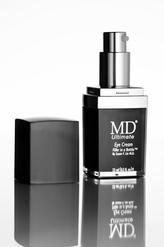
MD Ultimate Eye Cream
However, there are other, lesser used ingredients for eye creams that are just as effective. Ginkgo biloba, a botanical compond long esteemed in many parts of Asia, also has impressive skin regeneration and anti-aging properties. Ginkgo biloba is naturally fortified with flavonoid and terpenoid antioxidants, which can help stave off free radicals and improve blood flow to the skin. It also stimulates skin cell metabolism, and gently firm the skin.

Earlier, we mentioned how important it was to hydrate and moisturize the skin to keep it looking younger. A great skin conditioner that's uncommonly included in eye creams is alfalfa seed extract.  Known to be a fantastic humectant and boosting cell turnover, alfalfa seed extrat provides the right amount of extra moisture drier skin, and especially the eye area, needs to stay looking plumper and naturally firmer over time.  You'll notice a smoother apperance with continued use.

Green tea is a popular drink and is well documented for its benefits when enjoyed as abeverage. However, did you know that you can also use it directly on your skin? Green tea is rich in antioxidants and polyphenols and also serve as an anti-inflammatory. While placing cucumber slices to cool and depuff the eyes work, cold, used green tea bags works much better, and with added skin benefits.

MD Ultimate Eye Cream incorporates all of these key, active ingredients in this potent, hard-working formula, especially created to help reduce the apperance of fine lines and brighten, hydrate and "wake up" your eyes with extended use. This clinical-grade formula is the first cream ever designed to replenish the volume under your eyes resulting in FILLING IN the sunken area under your eyes. Its fast-absorbing texture penetrates instantly to gently massage its ingredients to reduce under eye congestion and restore lost volume under eyes.

You have nothing to lose but those pesky crow's feet. Try MD Ultimate Eye Cream today!

Friday, May 18, 2012

The Nitty Gritty on Your Eyelashes and Mascara


Eyelashes are hairs that protect the delicate surface of the eyeball from dust, sweat and debris. Each lash takes up to 7-8 weeks to grow back, and their lifespan averages around 8 months.  They’re also ultra-sensitive to touch. This sensitivity will warn the eye to instinctively close if something foreign comes too close, such as dust or a flying insect.


A Brief History on Mascara

The first known use of coating ones lashes to enhance their appearance is dated as far back as 3400 B.C. by the ancient Egyptians. They blended kohl, alligator dung, honey, and water to create the very first mascara known in history.
The first inventor of the modern mascara is credited to chemist T.L. Williams in 1915.  Williams noticed his younger sister, Maybel, using a mixture of coal dust and Vaseline to coat her lashes, giving them a fuller, dramatic appearance. Williams used this formula to create his own mascara product and after a prototype name, called it Maybelline after his sister and Vaseline. 


Simple Techniques for Curling your Lashes and Applying Mascara 

Before applying mascara, make sure your lashes are properly curled. Using a quality eyelash curler, position it over your upper lashes, making sure they’re as close to the eyelid as possible without touching it. Press down gently but firmly a few times, then move a little forward up the lash shaft and repeat, moving your wrist upward to shape the curl.  

When using your favorite mascara, be careful to only apply it to your upper lashes. Using the length of the brush, coat your lashes from underneath about 3- 5 times, making sure to cover every lash, especially the tiny ones on the edges.


Eyelash Conditioners and Different Types of Mascara

To have your lashes look thicker, fuller, and longer regardless of what mascara you’re using, you may want to invest in an eyelash conditioner. Look for ones with gentle, follicle-friendly ingredients like cytokines, antioxidants, milk proteins and peptides. Used daily, you should see results in as little as 4 weeks.

Modern mascaras come in many different formulas, such as waterproof, thickening, lengthening, voluminizing, or a combination of the above. Regardless of which you choose, look for tar in the ingredients list (an avoid it), and keep a look out for conditioning ingredients that help fortify your lashes, such as panthenol. Microfiber technology is also popular, used to coat even the tiniest lashes.

MD Lash Factor Eyelash Conditioner, is our world renowned, revolutionary, patent pending formula that combines the latest skin care science with safe, results oriented ingredients.  Our exclusive MD Lash Factor Cytokine Complex provides your eyelashes with the nutrients necessary to develop fuller, thicker, longer looking lashes.  Thiotaine, a powerful mushroom derived peptide, is also formulated to help protect and nourish your lashes and allow them to develop to their fullest potential.

Pair this with our MD Ultimate Mascara and get glamorous, Hollywood long lashes! MD Ultimate Mascara combines the potent, naturally derived antioxidants of the MD Lash Factor® eyelash conditioner with cutting edge, built in microfiber technology that wraps individual lashes, holds a curl and can be easily removed with regular facial cleanser.

Pump up your lashes and increase your batting average – get both products today and see the dramatic difference!

Friday, May 11, 2012

Nourish from the inside to help against hair loss with MD Nutri Hair


While statistics show that almost 40% of the people who suffer from hair loss are women, female pattern baldness, or alopecia, treatments is still a largely untapped market. A woman's hair stylist is often one of the first to notice the issue. Many women suffering from hair loss forego treatment due to cost, unavailability of effective items or simply a lack of selection.

A majority of the advice you read on the web or hear from various professionals on how to reduce hair loss usually discuss the benefits of topically applied products (ourselves included)!  Shampoos, conditioners, oils, serums and creams are commonly recommended, and each has various active ingredients that can help against hair loss when used regularly.

However, there are other steps one can take to fight hair loss – namely, nourishing your body and its cells from within. True, eating healthfully, regulating stress (and thus your mind), and exercising regularly all play a part. Supplements are another popular solution, and nutrients such as antioxidants and keratin are common suggestions, since both do wonders for keeping your hair strong and healthy.

However, neither compound really addresses the problem of hair loss directly. Instead of taking 2-4 different supplements to deal with several symptoms or issues, we suggest one simple, natural-based and affordable solution – MD Nutri Hair (previously known as MD Hair Factor). 
MD Nutri Hair’s proprietary blend of biotin, niacin, Vitamin E, omega rich flaxseed meal, and the active ingredient verbascoside (lilac extract) work to stop dihydroxytestosterone (DHT), a hormone causing excess sebum production and androgenic alopecia.  This lilac extract also possess a naturally strong antioxidant, anti-inflammatory action against the Malassezia Furfur, a fungus that grows wildly in in hair follicles with too much oil, causing inflammation and ultimately, hair loss.

MD Nutri Hair has an exceptional 28,000 ORAC value to protect and rejuvenate your hair follicles.


The ORAC value is a measurement of antioxidant potency of natural ingredients. Compare that to tradtionally high antioxidant foods such as berries (with about 90 ORA) or the acai berry with about 1,090 ORAC). 


MD Nutri Hair also contains strong anti inflammatory compounds that decreases IL-8 from TNF, a known cause of aging. A full head of hair is a sign of youth, so by protecting and nourishing your follicles with MD Nutri Hair Complex, you too can help your hair reach their fullest potential - literally. 
Together, these clinical strength ingredients favor protein synthesis of hair and hair growth.
We use advanced biotechnology backed by excellent quality standards, and only select the highest verbascoside-producing cell strains from the lilac. As a result, the molecule has a much higher concentration than normal - up to 1,000 times than by using standard extraction techniques.
MD Nutri Hair is also pollutant free and exceed Bio-Eco Cosmesi Guidelines as a certified organic ingredient. The lilac plant stem cells are grown in a sterile and protected environment, without pesticides, heavy metals and toxins.
For an all-in-one supplement specifically for thinning hair and hair loss and rapid results, add MD Nutri Hair to your diet and see less hair on your brush and bathroom floor in as early as a few weeks! Use our QR code for more information.